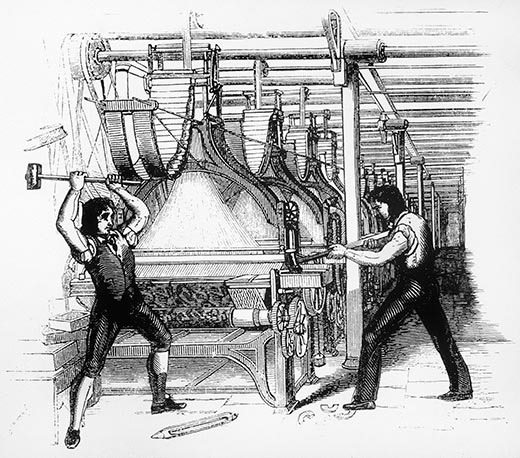
Until a few weeks ago I had not come across the term technophobia. I understood that people could be quite reluctant to use technology as it can seem to be complex and confusing. However I did not realise the extent of anxiety some people feel when using technology. Technophobia can be seen to go right back into the 18th century, when Ned Ludd smashed up 2 stocking frames. This is where the term Luddites stemmed from. Luddites in the modern day are people opposed to new technology, this is quite similar to people with technophobia, as they have no desire to use or try to understand how to use technology. Technophobia can be seen as a barrier within school's as teacher's may project their negative attitude or anxiety onto the children when using technology.
Due to technology rapidly evolving, with new advanced technologies coming into schools there is an increase in computer anxiety and negative attitudes towards these technologies. In 1997 a BBC news report highlighted how there was an increase in the number of people who are victims of technophobia due to their lack of understanding and knowledge of the modern technologies (BBC, 1997). This technophobia has been around for decades, but can be seen as a huge barrier in schools when introducing a new technology into the classroom.
In the National Curriculum (2013) it highlights that ICT should be embedded throughout the curriculum therefore it is the teacher's duty to implement technology throughout most lessons. If teachers are technophobic, students will not have the exposure they need to the different, innovative technologies. This could have a detrimental effect on these student's as they need to be able to learn how to use technology effectively or they will not have sufficient knowledge and skills to use technology in the digital world.
It is for the schools to provide correct training and support for these teachers. Brosnan (1998) indicates that without effective training and appropriate support the teachers will either avoid computers or "teach computers while passing anxiety, negative cognitions and negative attitudes to their students". This negative attitude and anxiety could influence the student's (Brosnon, 1998). Therefore with the correct guidance teacher's can start to change their attitudes on technology. As teacher's, they are tasked to inspire and provide opportunities for the children and therefore it is the schools duty to provide training and support to aid this.
REFERENCES:
BBC, (1997) "Is technology taking over the world?" Available at: http://news.bbc.co.uk/1/hi/special_report/for_christmas/_new_year/technophobia/41853.stm (Accessed: 18 March 2016).
Brosnan, M. (1998) Technophobia. London: Routledge.
Coniff, R. (2011) [image] Available at: https://strangebehaviors.wordpress.com/2011/02/24/the-luddite-revolution-birth-of-a-brand/
Department of Education (2013), Computing programmes of study: Key Stages 1 and 2.

No comments:
Post a Comment